

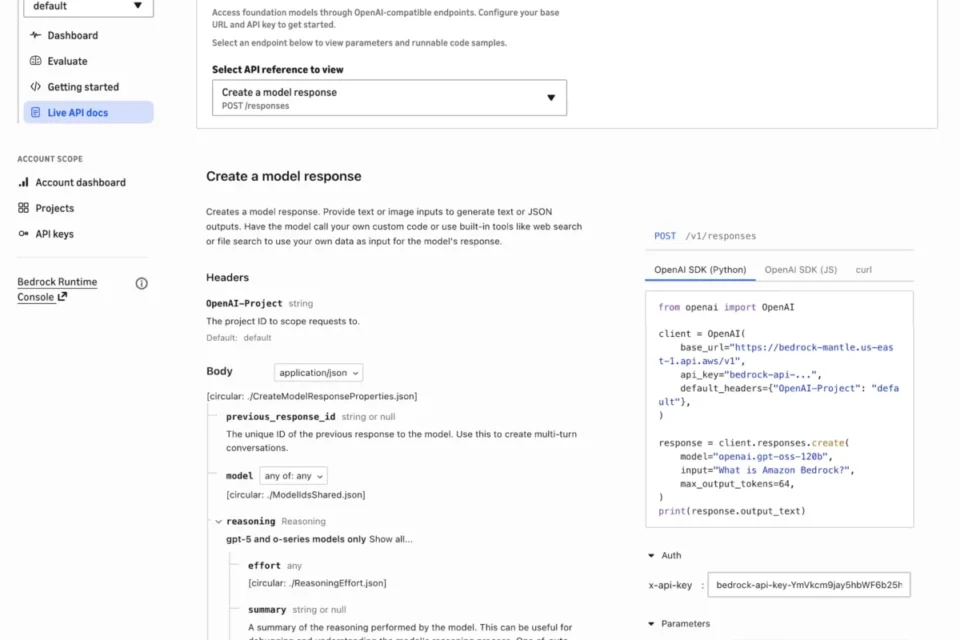
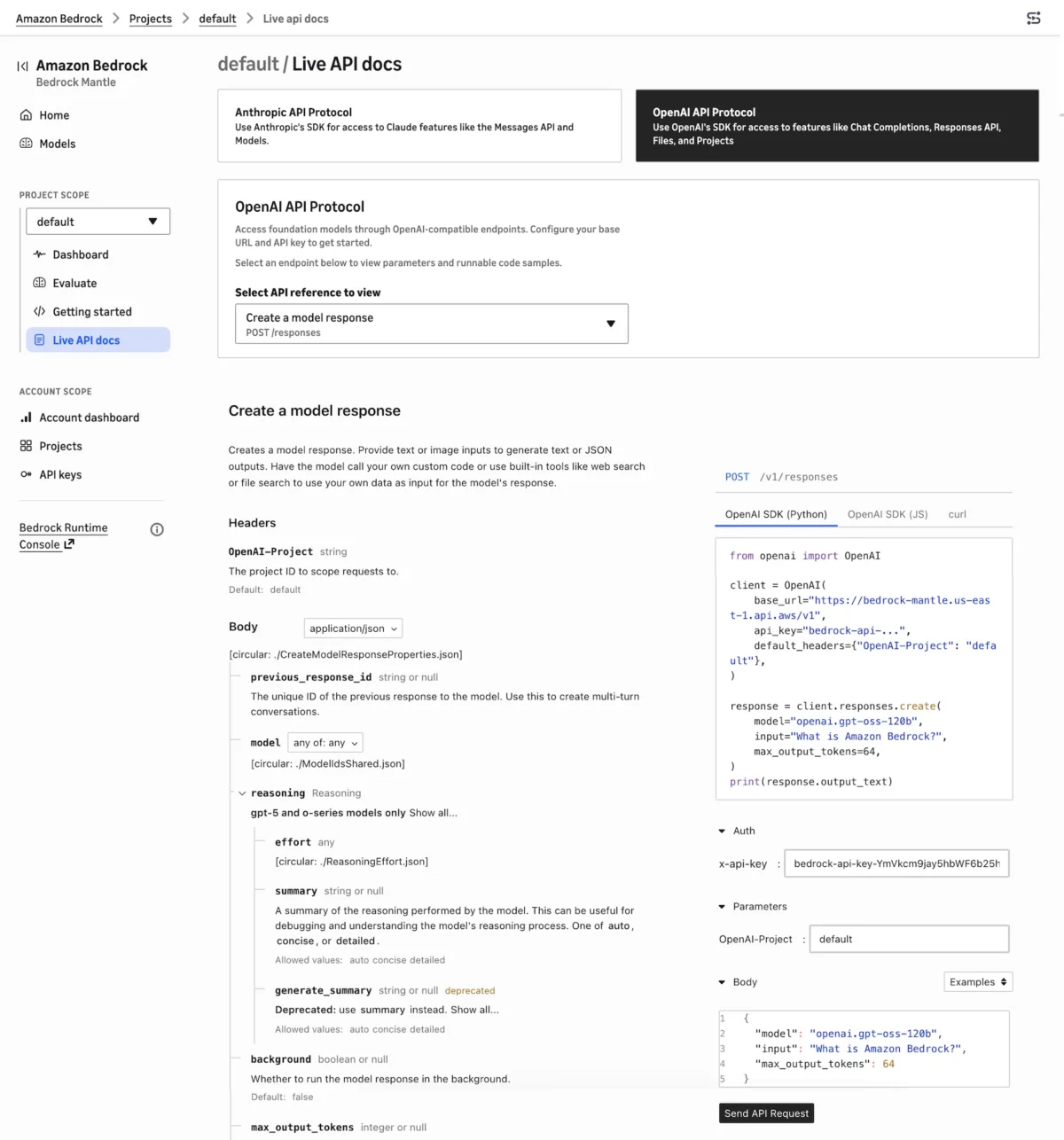
In a significant leap forward for generative AI development, Amazon Web Services (AWS) has unveiled a revamped console experience for Amazon Bedrock. Designed to streamline the lifecycle of AI application development—from initial experimentation to high-scale production—this update introduces the bedrock-mantle inference engine. This next-generation infrastructure is engineered to provide unparalleled performance, reliability, and security, effectively bridging the gap between cutting-edge foundational models and developer productivity.
Main Facts: A Paradigm Shift in AI Orchestration
The new Amazon Bedrock console represents more than just a visual refresh; it is a fundamental shift in how developers interact with large language models (LLMs). By centralizing the workflow around the bedrock-mantle endpoint, AWS is offering seamless compatibility with industry-standard protocols, including the OpenAI Responses API, OpenAI Chat Completions API, and the Anthropic Messages API.
Key features of this new environment include:
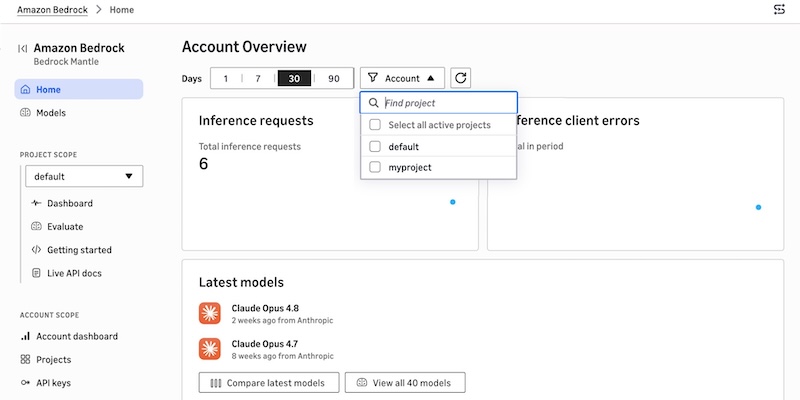
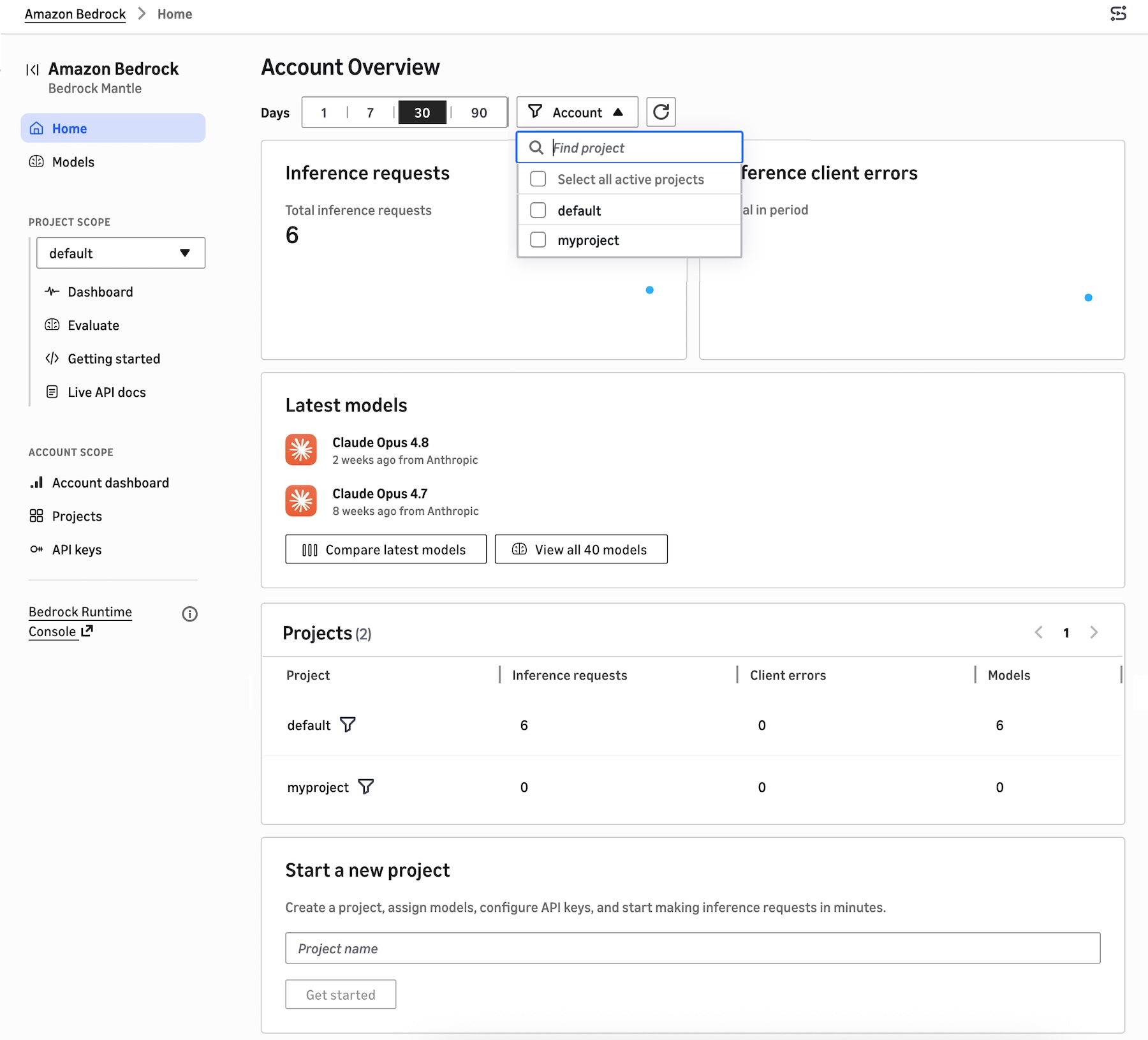
- Project-Based Workflows: Developers can now create isolated projects, assign specific models to them, configure unique API keys, and monitor performance metrics in real-time.
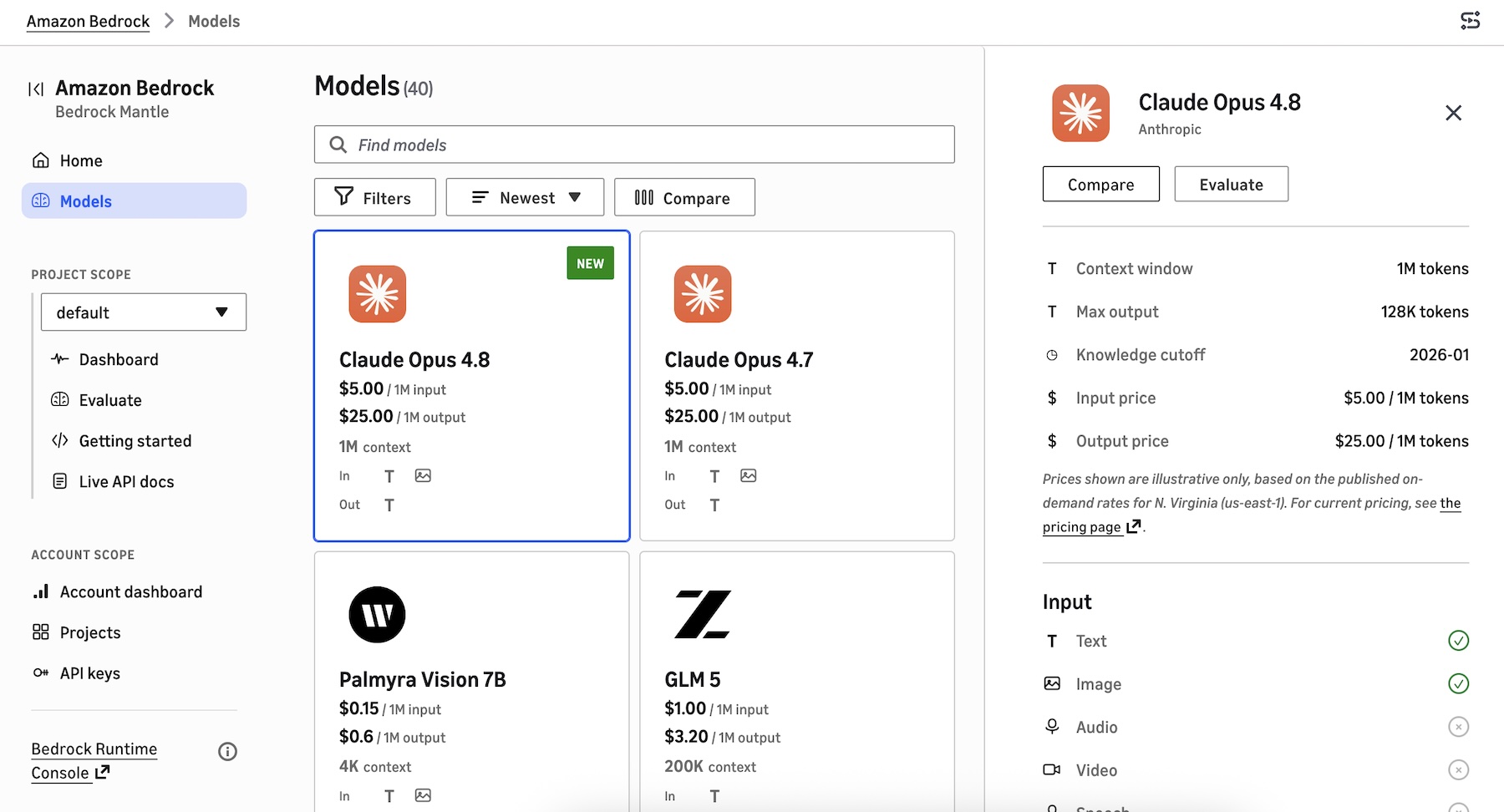
- Unified Model Catalog: A sophisticated catalog allows users to filter by capability, token count, and pricing. Most impressively, it supports side-by-side comparison of up to three models, enabling data-driven selection based on specific use cases.
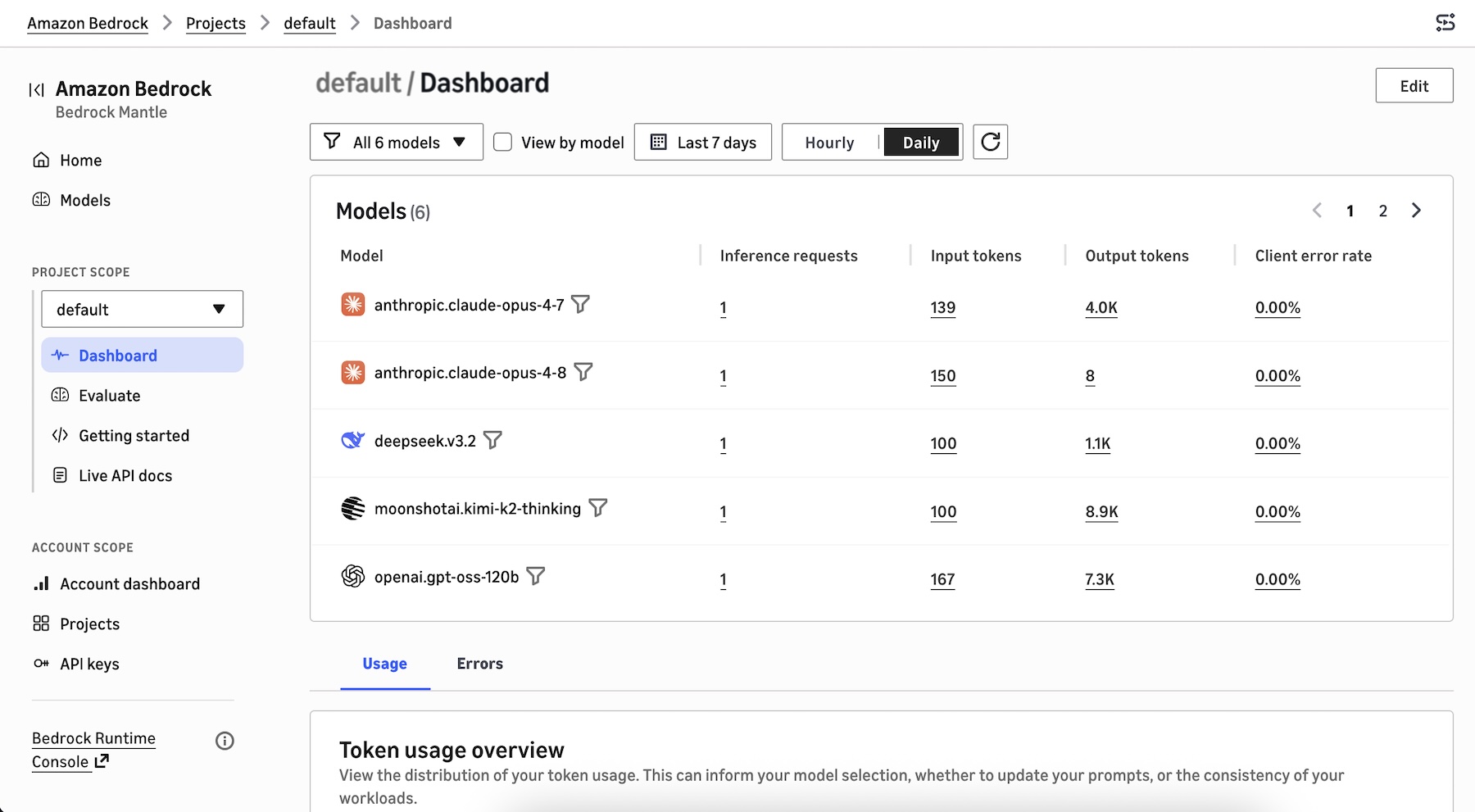
- Advanced Analytics: The dashboard provides granular visibility into token usage, request latency, and error rates, empowering engineering teams to optimize prompts and manage costs with surgical precision.
- Seamless Integration: The "Getting Started" module provides instant code snippets for Anthropic and OpenAI SDKs, alongside native support for connecting AI coding assistants like Cursor, Cline, and Claude Code.
Chronology: The Evolution of Bedrock
To understand the significance of this update, one must look at the trajectory of Amazon Bedrock since its inception.
The Foundation (Early 2023)
When Amazon Bedrock was first introduced, it was framed as a serverless service designed to make foundational models accessible via API. The focus was on ease of access to models from AI21 Labs, Anthropic, and Amazon’s own Titan family.
The Expansion Phase (Late 2023 – Early 2024)
As the generative AI ecosystem exploded, Bedrock expanded rapidly, adding support for Meta’s Llama models, Mistral AI, and Cohere. During this period, AWS introduced enterprise-grade features such as Guardrails, Knowledge Bases (for RAG), and Agents. While these features were powerful, the complexity of managing large-scale deployments grew, creating a need for a more streamlined developer interface.

The Mantle Era (June 2026)
The release of the bedrock-mantle console marks the transition from "model accessibility" to "application lifecycle management." By decoupling the high-performance inference engine from the traditional, broader Bedrock management tools, AWS has acknowledged that developers require a specialized, high-velocity environment for iterating on production-grade AI agents and applications.
Supporting Data: Why "Mantle" Matters
The technical architecture behind bedrock-mantle is designed to solve the "latency-vs-reliability" trade-off that often plagues production AI applications.
Performance Metrics
By leveraging the Mantle engine, AWS provides developers with a clear view of their consumption. The new console’s telemetry allows teams to track:
- Tokens per Inference: Allowing for precise cost estimation.
- Inference Requests per Minute (RPM): Essential for scaling throughput.
- Error Distribution: Enabling rapid debugging of prompt injections or model failures.
Comparison Capability
In a controlled environment, developers can execute identical prompts across three distinct models simultaneously. This feature is particularly vital for organizations transitioning between model versions or benchmarking open-weight models against proprietary alternatives. The ability to visualize the response differences, combined with the underlying cost data for each, provides an objective foundation for decision-making that was previously difficult to achieve without manual coding scripts.
Official Responses and Strategic Intent
AWS’s move is clearly aimed at capturing the "developer-first" market. By integrating OpenAI-compatible APIs directly into the Bedrock console, Amazon is removing the friction often associated with migrating existing applications from other providers to the AWS ecosystem.
"We are building for the developer who needs to move from a whiteboard idea to a scalable production endpoint in minutes," noted an AWS spokesperson during the product launch. The integration of AI coding assistants—such as Claude Code and Cursor—indicates that AWS is not just hosting models; it is becoming an integral part of the developer’s daily toolkit.
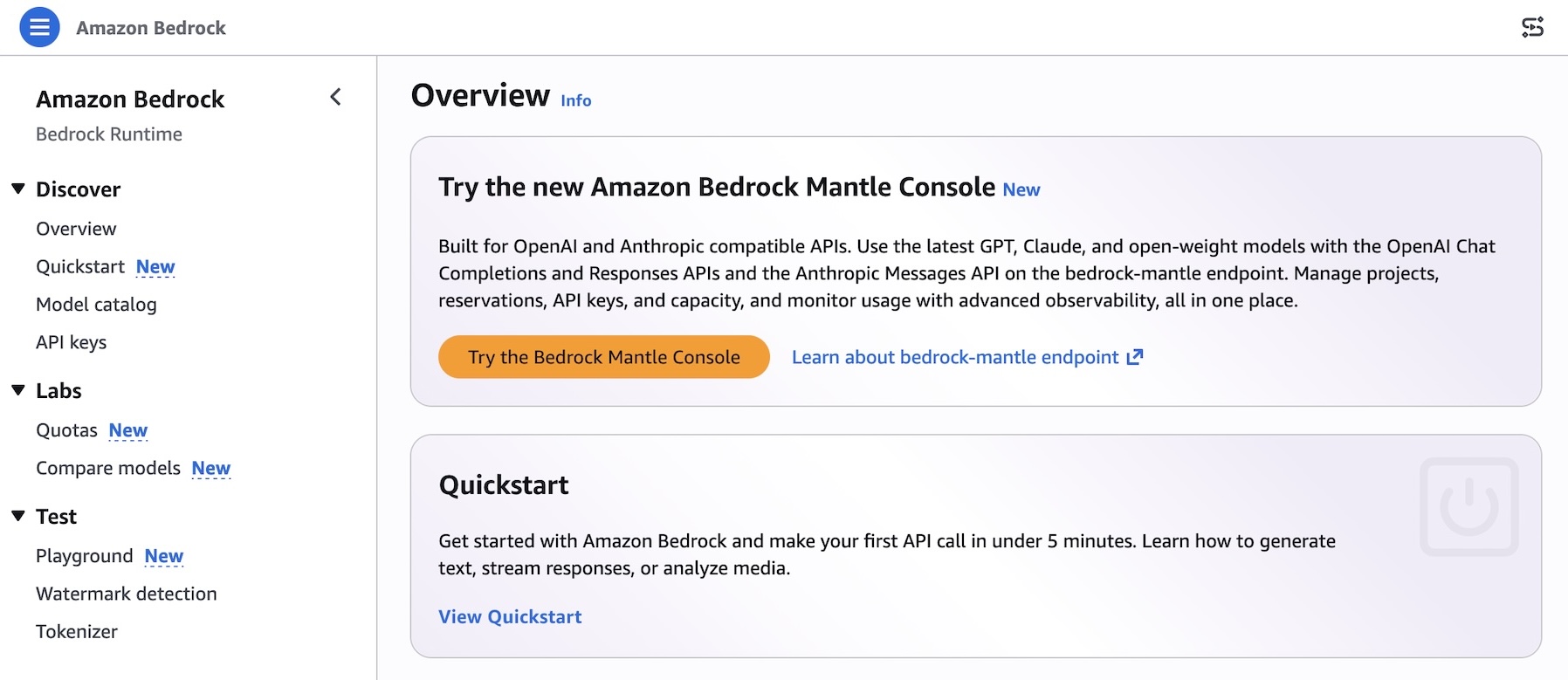
Furthermore, by maintaining the original Bedrock console for "fully-managed" features like fine-tuning, Guardrails, and Agents, AWS is creating a clear, two-tier architecture:
- The Bedrock Mantle Console: Focused on high-speed iteration, API compatibility, and inference optimization.
- The Core Bedrock Console: Focused on compliance, security, and long-term enterprise orchestration.
Implications: The Future of Generative AI Development
The implications of this launch extend far beyond the AWS ecosystem.
1. The Death of Proprietary Lock-in
By fully embracing the OpenAI and Anthropic API protocols, AWS is effectively commoditizing the inference layer. Developers are no longer restricted by the proprietary SDKs of specific model providers. Instead, they can treat the bedrock-mantle endpoint as a standardized, high-performance gateway that can switch between models as the market evolves.
2. The Rise of the "AI Agent" Developer
The specific inclusion of "Clients" in the console—where one can connect AI agents like Cursor or Cline—is a landmark decision. It suggests that AWS views the future of software development as a collaborative effort between humans and AI agents. By providing a "one-click" routing mechanism for these agents into the Bedrock backend, AWS is positioning itself as the infrastructure layer for the next generation of autonomous software engineering.
3. Economic Optimization
As organizations move past the "proof of concept" stage, the cost of inference is becoming a board-level concern. The detailed dashboarding provided in the new console—which breaks down token usage at a granular, per-project level—is a necessary evolution. It allows for "FinOps for AI," enabling companies to identify which specific models or prompts are driving their cloud spend and adjust accordingly.
4. Global Availability
The rollout is not limited to a single region; it is available immediately in major hubs including US East (N. Virginia), Asia Pacific (Tokyo, Sydney), and Europe (Frankfurt, London). This ensures that multinational corporations can maintain data residency compliance while taking advantage of the latest infrastructure updates.
Conclusion
The introduction of the new Amazon Bedrock console and the bedrock-mantle engine is a decisive move by AWS to solidify its dominance in the generative AI space. By focusing on the developer experience—simplifying the transition from local experimentation to global production—AWS is lowering the barrier to entry for high-performance AI applications.
For developers, the message is clear: the era of "AI experimentation" is over, and the era of "AI engineering" has begun. With tools that prioritize visibility, compatibility, and speed, the new Bedrock console is poised to become the standard interface for building the next generation of intelligent applications. As AWS continues to iterate, the industry should expect to see further blurring of the lines between traditional software development and AI-driven model orchestration.
